A New Reality
Gold Is Screaming a Warning (But No One’s Listening)
Russell Napier is a global market strategist renowned for an analytical framework deeply rooted in financial history. "History Doesn't Repeat Itself, but It Often Rhymes", Few embody the idea that "history doesn't repeat itself, but it often rhymes" as convincingly as Napier
At Pinetree Macro, we recently compared our investing frameworks with Napier’s and identified significant overlaps in our outlook. We have consolidated the core pillars of this shared thesis below:
The Reset of the Global Monetary Order
In his recent 2026 interview, Napier argued that the global monetary system of the last 30 years is currently fracturing. Understanding where this transition leads the world and the investment landscape is the defining challenge for modern investors.
The Five Paths to Debt Resolution
With global debt levels at historic highs, Napier identifies only five possible resolutions:
- Austerity
- Default
- Exceptional Growth
- Hyperinflation
- Financial Repression
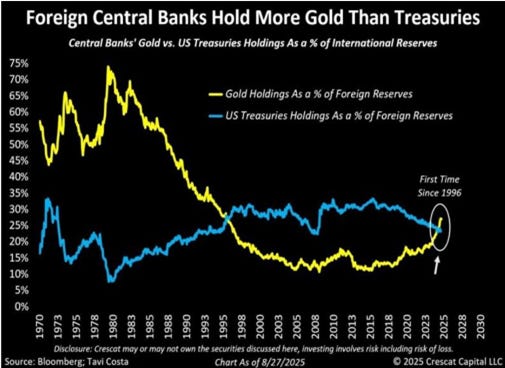
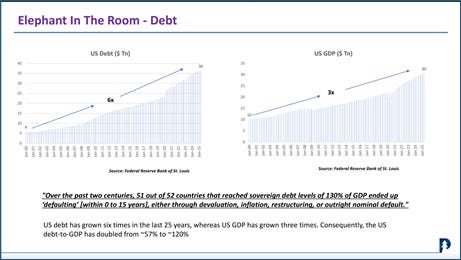
Financial markets react fundamentally differently to each path. Consistent with our previous research, Napier views austerity as politically and socially impossible in the current climate. Furthermore, while high growth is desirable, it remains unlikely, and hyperinflation is a chaotic “tail risk” that would devastate the US Dollar.
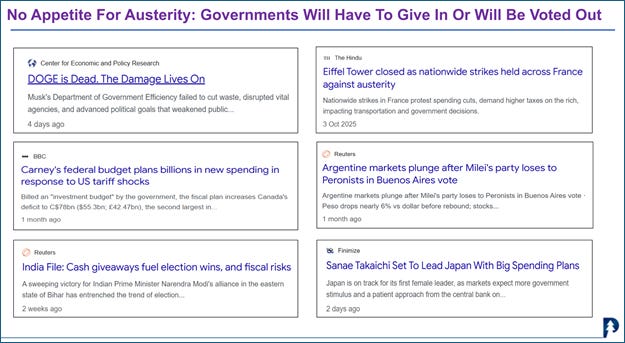
Russell talked about how austerity is not a possibility, something which we have repeatedly discussed about in detail in the past.
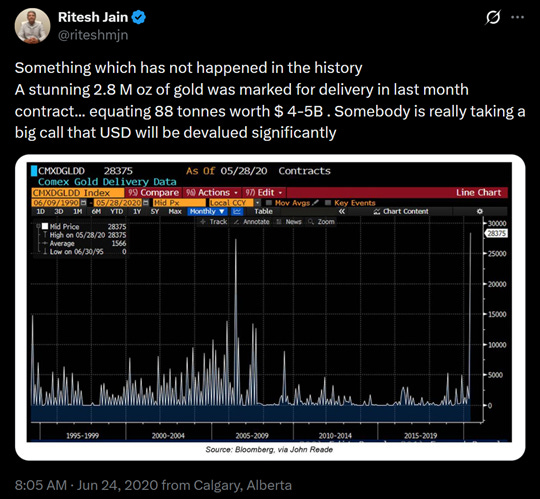
Russell thinks very high growth is possible but unlikely, hyperinflation is very dangerous asset prices may follow that trend and US Dollar will weaken.
The Case for Financial Repression
Napier views Financial Repression as a period where inflation consistently outpaces bond yields as the most probable outcome. During the post-WWII era of repression, equities began the cycle at undervalued levels (P/E of 10), allowing them to perform well initially. Today, because broad markets are at record valuations, we have largely bypassed the equity phase and moved directly into commodities. Despite high headline valuations, undervalued US sectors and "under-owned" emerging market equities remain highly attractive.
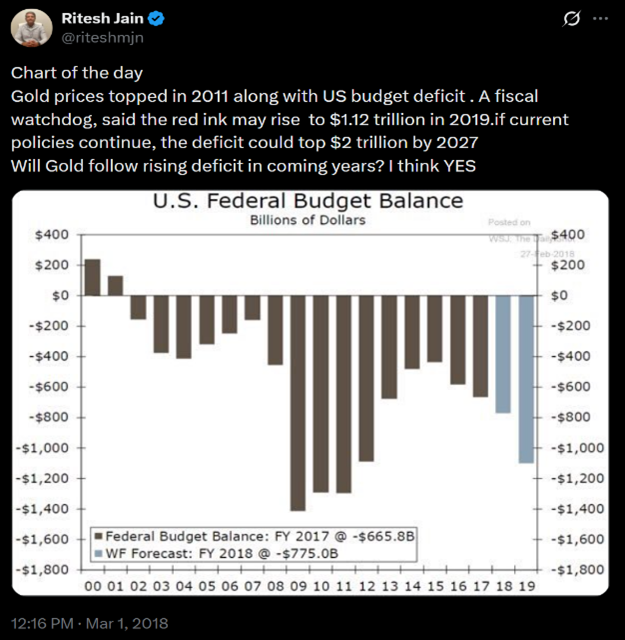
Russell also talked about how savers and fiat owners lose their wealth during the period of financial repression while other who owned the right set of real assets made wealth like never imagined before. We have also consistently outlined how to invest in the "Brave New World"
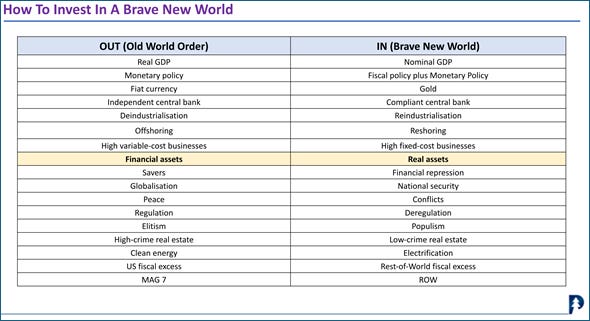
Russell talks how names that are not fancy to invest in are outperforming mega-tech and AI stocks like Shipyards for many years; these stocks are becoming the indication of capital moving into the real economy. We have been discussing Grid, mining and factory construction themes for many years now.
He also discussed how countries that understand financial repression and have modelled their economy (Real Assets, fiscal policy direction control) accordingly are the ones that will do better than the western economies that don’t yet understand it fully. We have also discussed how Latin America continues to be a region we remain interested in for the very same reasons.
We and Russell both believe that parts of the US market (not part of the S&P 500 index largely) still offers a great value exposure and are still under-owned, even historically during the past financial repression these themes did well.
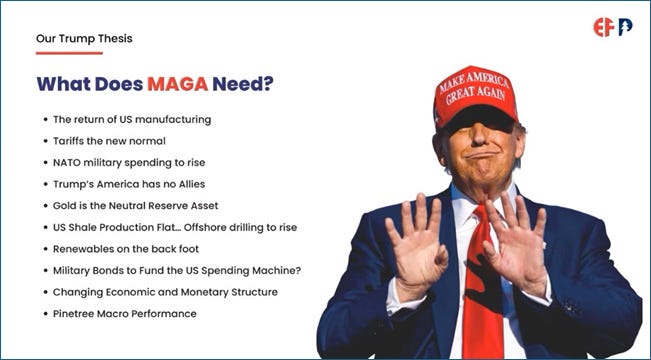
The current monetary system is not working for US or China which is why we have President Donald Trump making such radical changes looking to move away from this monetary system.
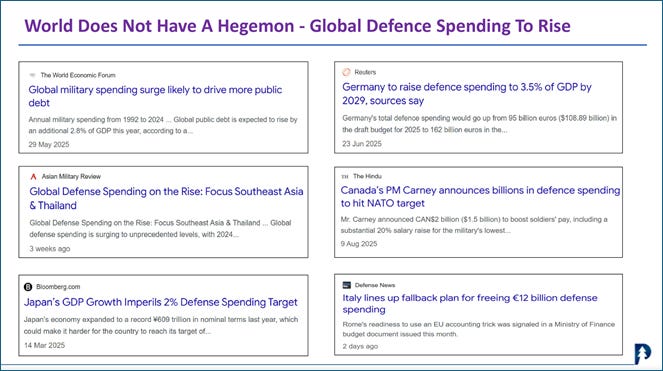
Russell also says that the world which had saved all its savings in US dollars today needs it back, they need it back to provide capital to their underinvested domestic sectors namely defence and energy. Countries like Japan, Germany and UK will liquidate their US holdings to invest in domestic sectors.
Russel's framework and our investing thought process draws many parallels where we prepare our asset allocation to be positioned appropriately to weather this global monetary reset or as we like to call it "Brave New World".
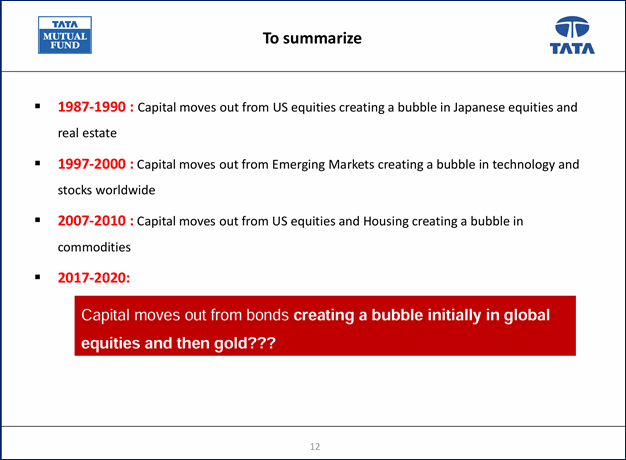
Russell Napier's analysis serves as a powerful validation of the "Brave New World" we have long anticipated. As the global monetary system resets, the distinction between those who hold paper promises and those who own real assets will define the next decade of returns.
Russell's views are taken from his recent talk hosted on The Meb Faber Show Russell Napier: Gold Is Screaming a Warning (But No One’s Listening)